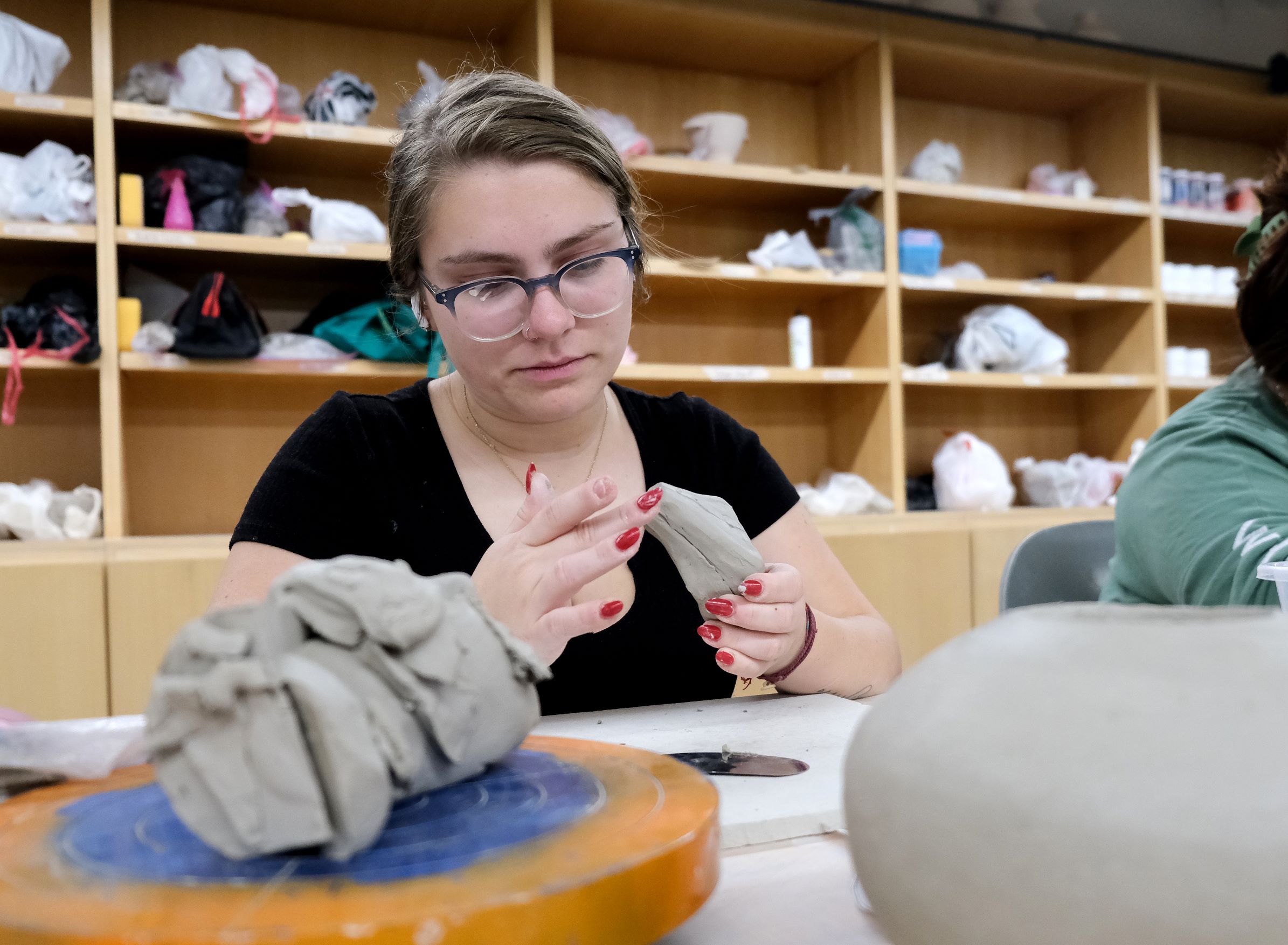
While most students in Andrea Olmstead's Ceramics class worked on teapots, others continued working on different projects. Learn more about our Fine Art Program here.


While most students in Andrea Olmstead's Ceramics class worked on teapots, others continued working on different projects. Learn more about our Fine Art Program here.
Topics: Student Experience, Programs and Majors, Humanities
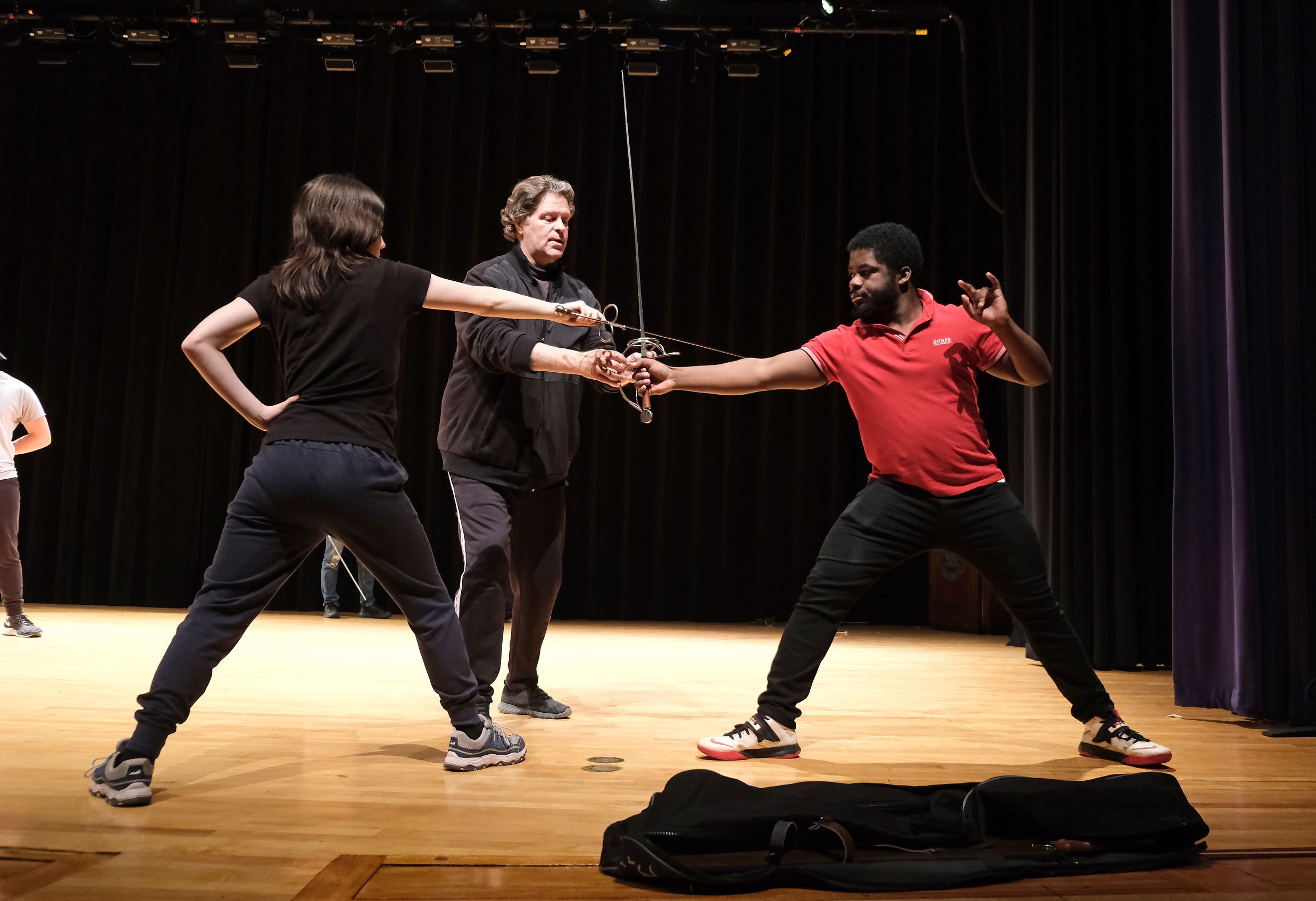
Theater Professor Kelly Morgan teaches students how to utilize the sword as an extension of the character and a a vehicle by which the actor propels the story in his
Stage Movement: Combat in Weston Auditorium. This workshop-oriented course utilizes the basis techniques of movement with emphasis on developing each student's potential for effective physicalization of a character on stage.
Topics: Student Experience, Programs and Majors, Communications/Media
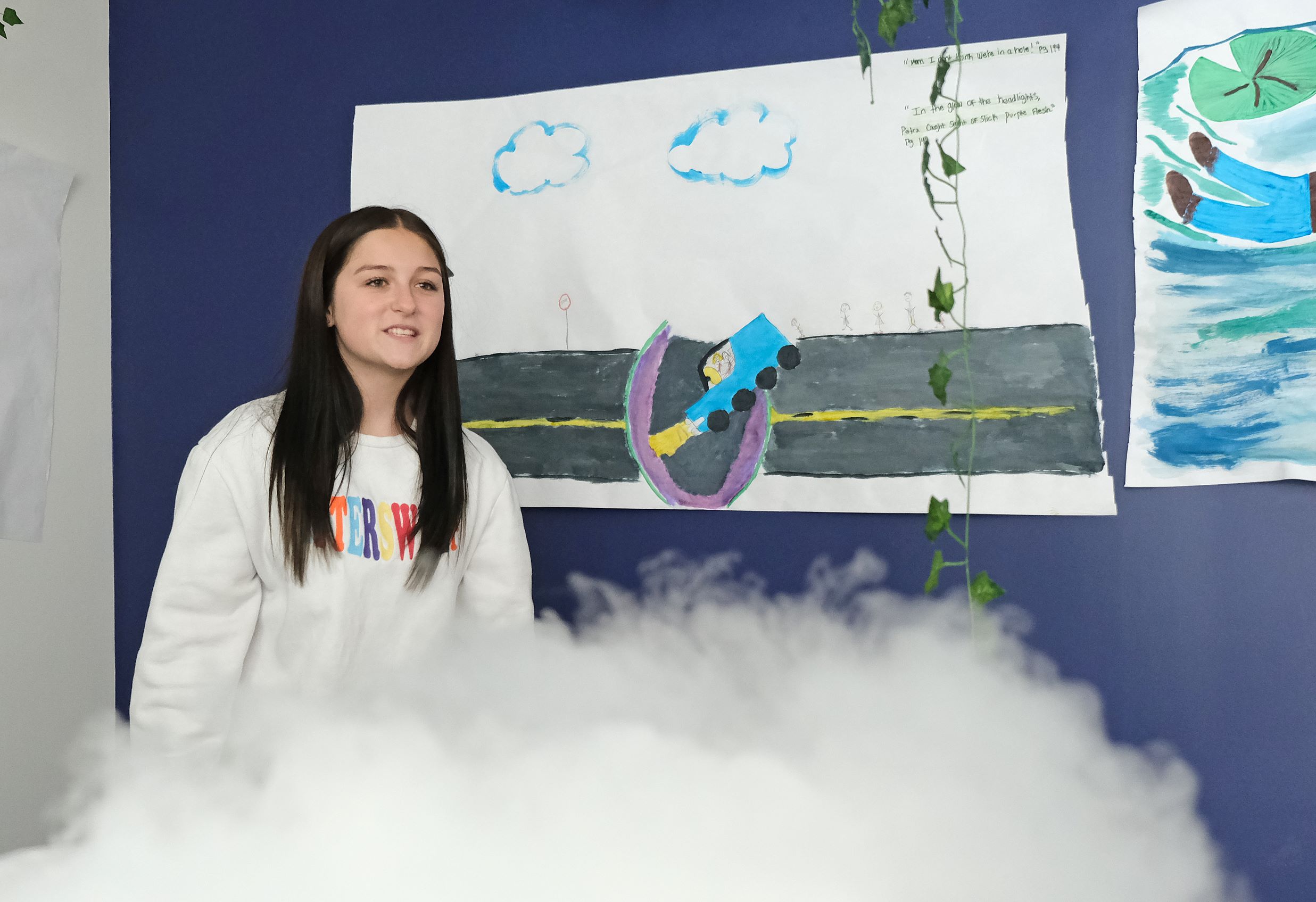
The mood was set in an Antonucci Science Complex study space with hanging vines, the scent of flowers, and fog - courtesy of dry ice - as students in the Dr. Katharine Covino (English Studies) and Dr. Erin MacNeal Rehrig (Biology and Chemistry) FYE course "terraform" the space. Students also transformed the space by hanging & presenting the posters they created using the book, Bloom by Kenneth Oppel as inspiration.
Topics: Student Experience, Our Students, Programs and Majors, Humanities, Health and Natural Sciences
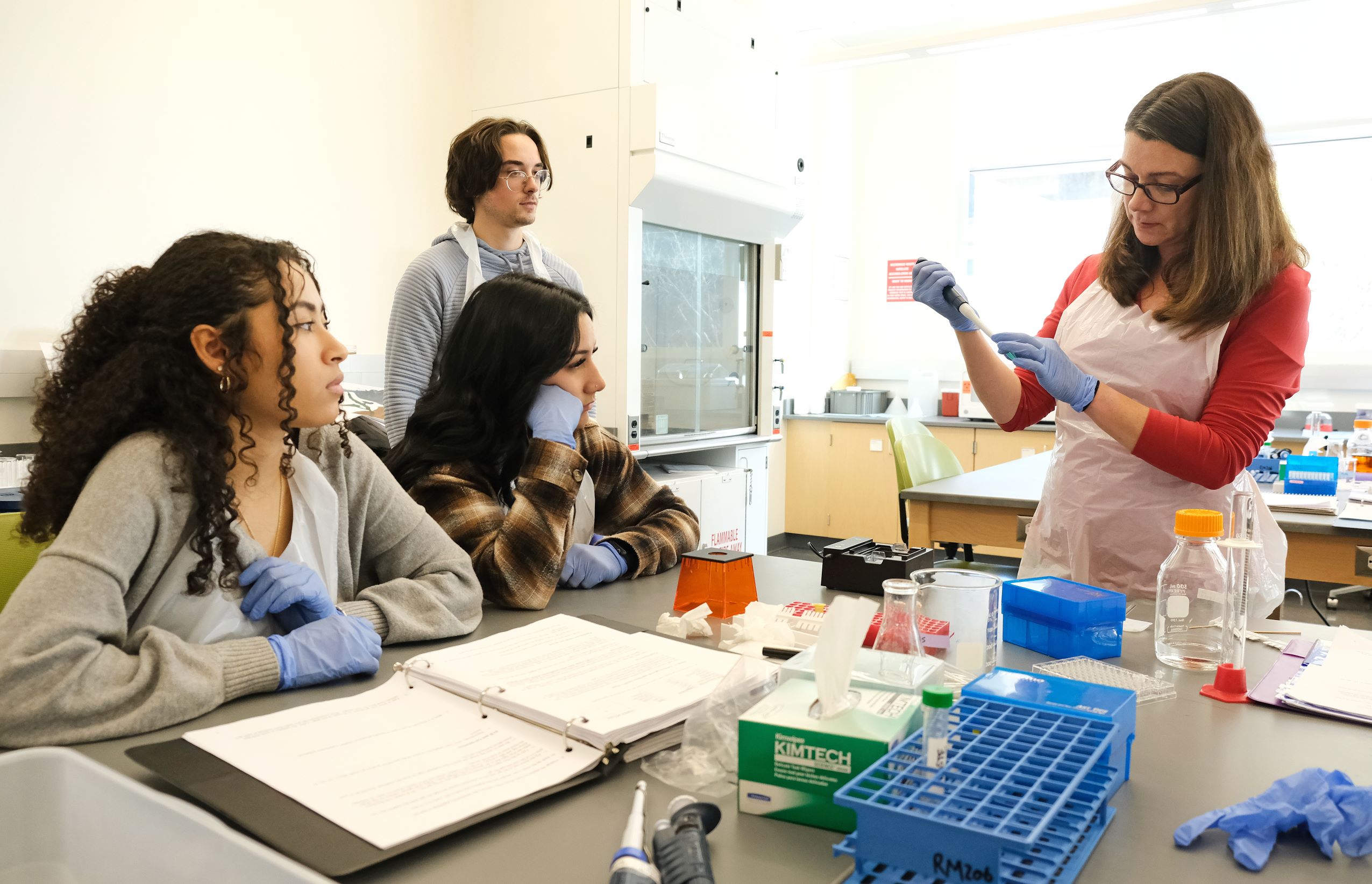
Students in General Biology Lab learn about Gel electrophoresis, a technique used to separate DNA fragments and other macromolecules by size and charge. DNA samples are loaded into wells (indentations) at one end of a gel, and an electric current is applied to pull them through the gel. DNA fragments are negatively charged, so they move towards the positive electrode. Because all DNA fragments have the same amount of charge per mass, small fragments move through the gel faster than large ones. When a gel is stained with a DNA-binding dye, the DNA fragments can be seen as bands, each representing a group of same-sized DNA fragments.
Topics: Student Experience, Programs and Majors, Health and Natural Sciences
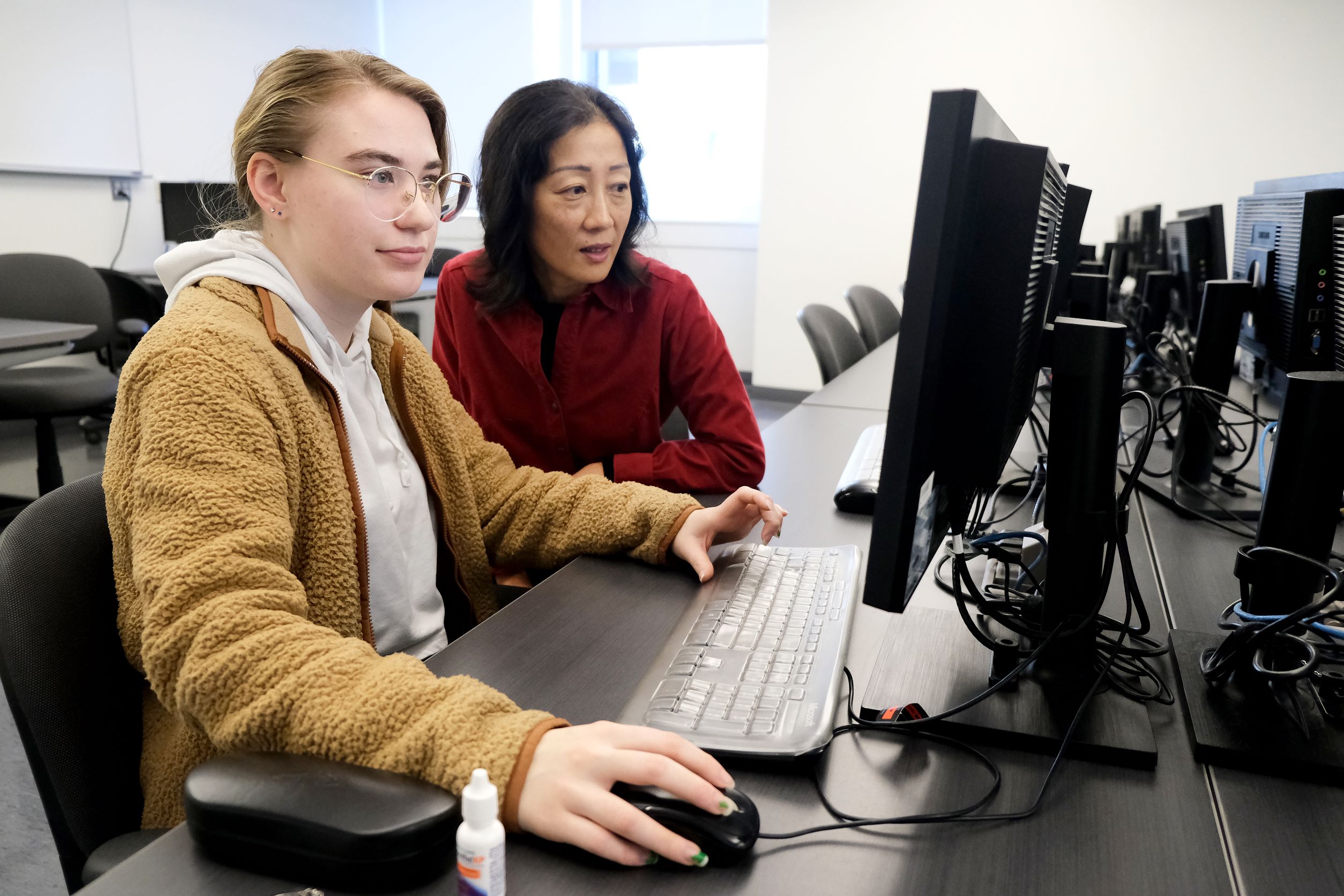
Students in Earth and Geographic Sciences Professor Jane Huang's Web GIS (Geographic Information System) course work on mapping projects. One student is mapping out all of the highest elevation points in each state.
Topics: Student Experience, Programs and Majors, Health and Natural Sciences
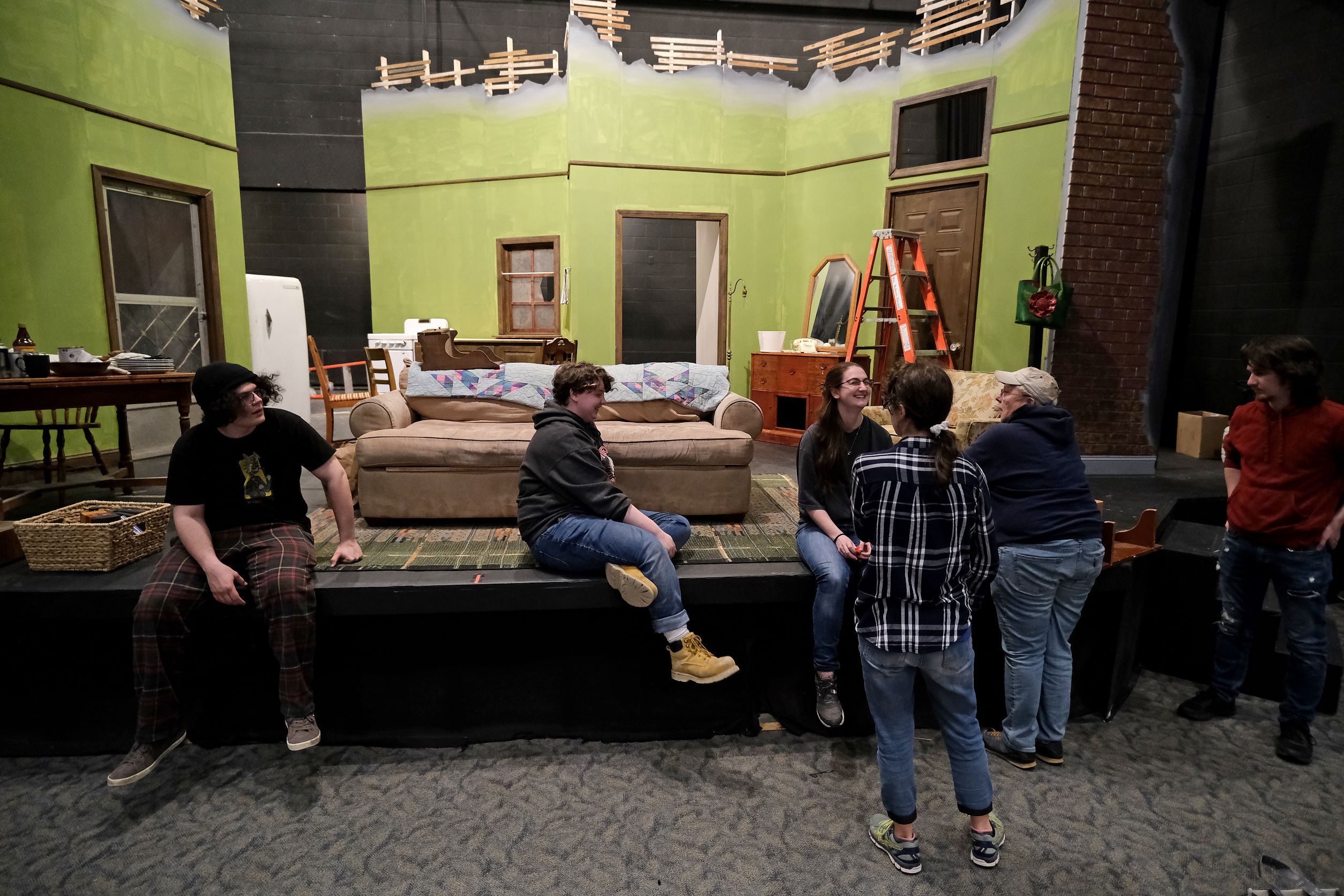
This afternoon, students in Technical Theater Concentration continued to put the finishing touches on the set for the upcoming production of A Raisin in the Sun at the Wallace Theater for the Performing Arts in the McKay Complex . The student designed & student built will be completed under the tutelage of Professor Ellen (Cap) Corduan. Learn more about the production here.
Topics: Student Experience, Programs and Majors, Communications/Media
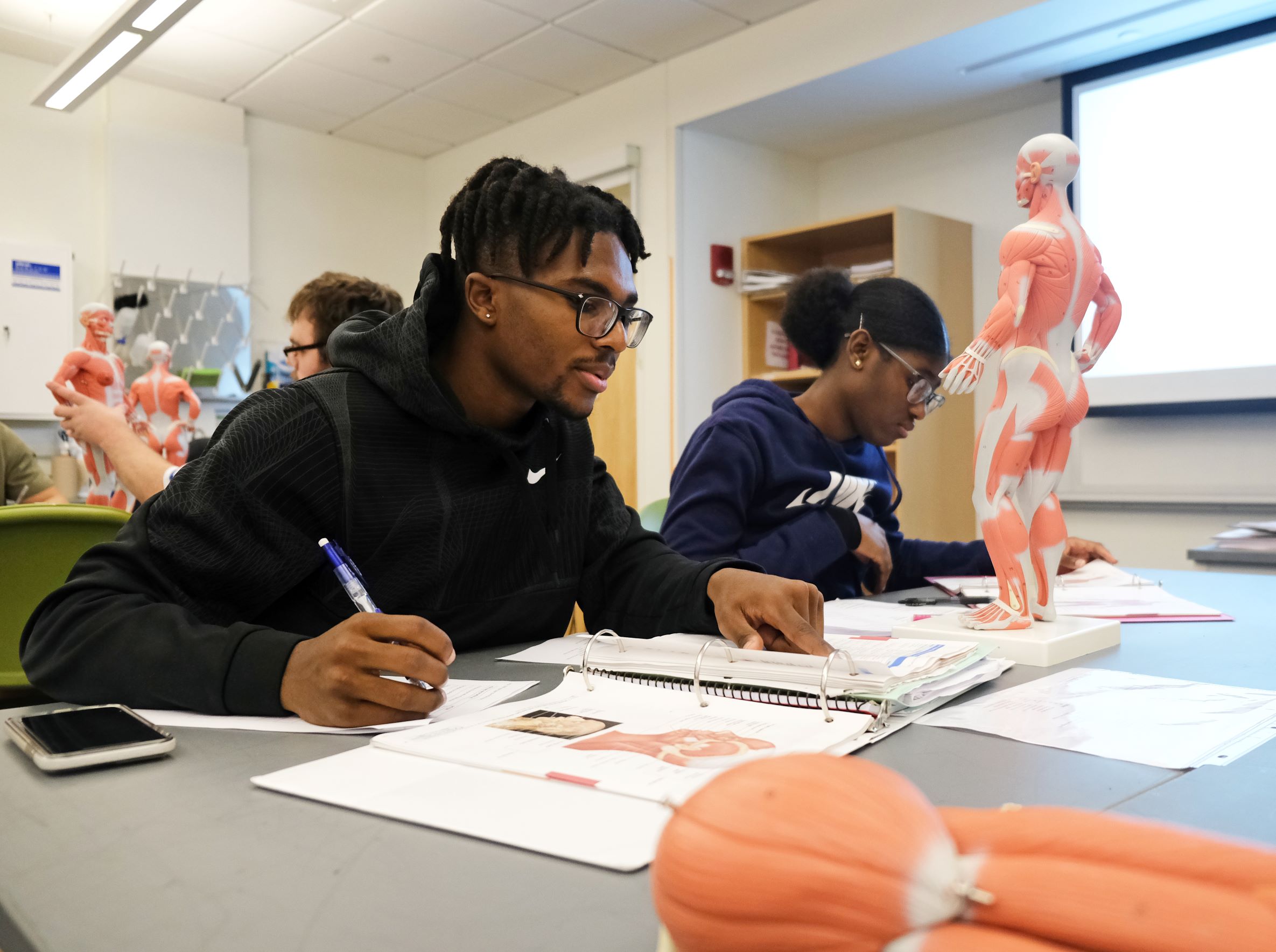
Students in Biology and Chemistry Professor Lisa Grimm's Anatomy and Physiology Lab identify musculature and what it's function is.
Topics: Student Experience, Programs and Majors, Health and Natural Sciences
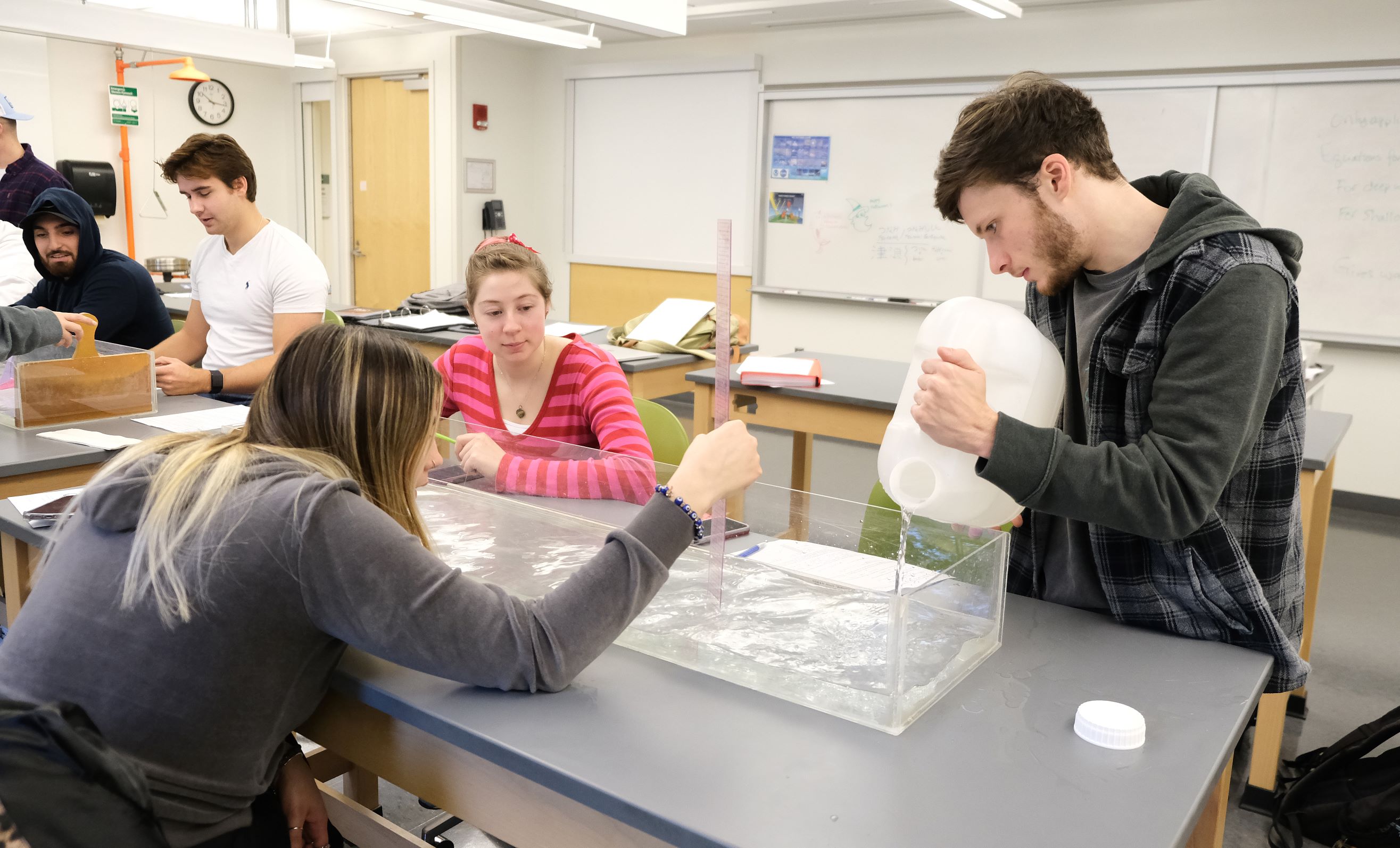
Students in Earth and Geographic Sciences Professor Elizabeth Gordon's Oceanography class learn about physical oceanography (waves, tides, currents) by creating their own waves in lab. One group decided to emulate a tidal wave to see how their tiny boat would fare.
Topics: Student Experience, Programs and Majors, Health and Natural Sciences
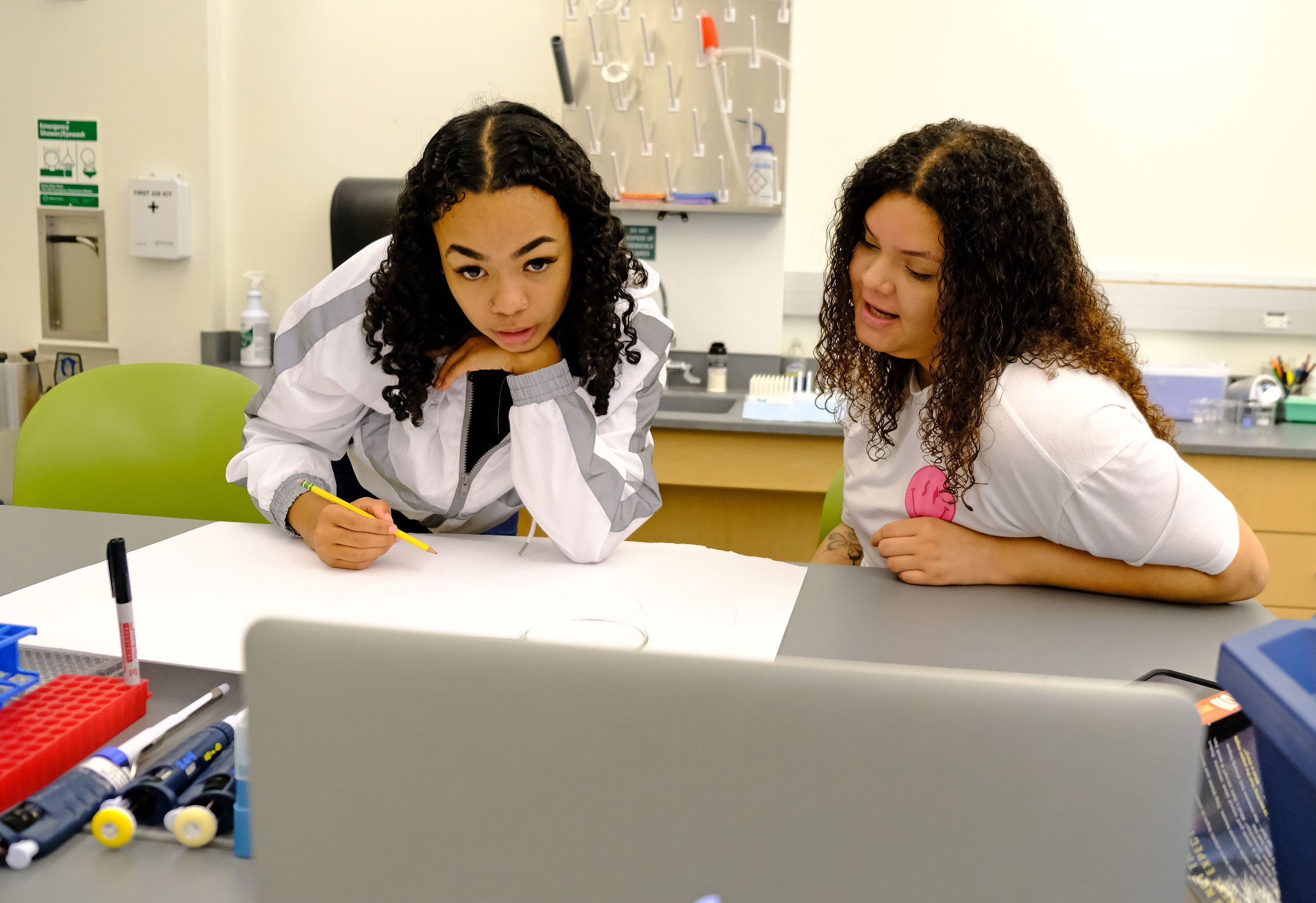
Dr. Katharine Covino (English Studies) and Dr. Erin MacNeal Rehrig (Biology and Chemistry) have teamed up to teach a unique STEAM (Science, Technology, English, Art, and Math) where science and literature collide, using the book, Bloom by Kenneth Oppel as inspiration. Yesterday's assignment was an art project, wherein students chose a passage from the book, and painted their interpretation of the scene.
Topics: Student Experience, Our Faculty, Programs and Majors, Humanities, Health and Natural Sciences
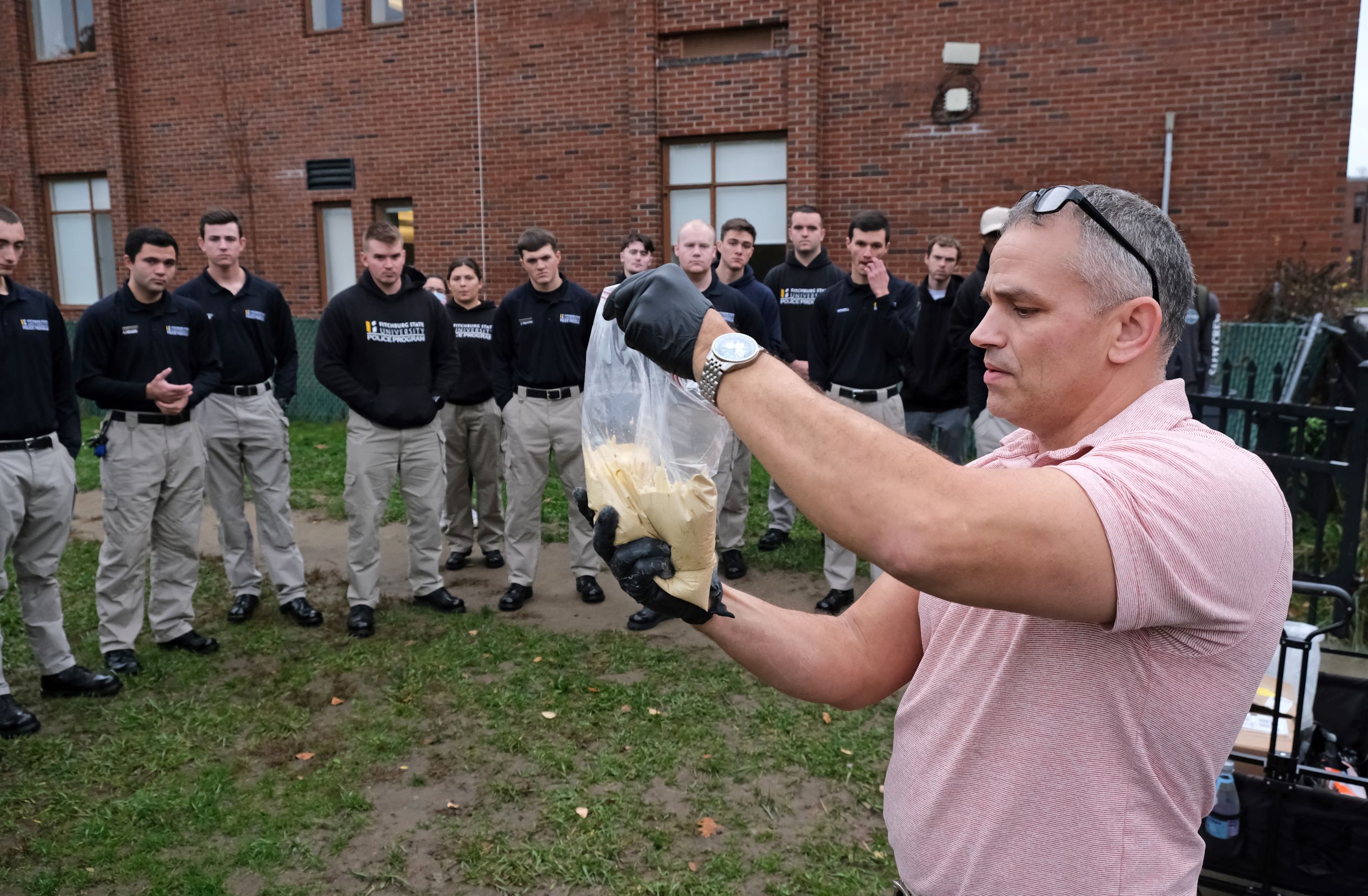
Today, students in Professor Michael S. McCutcheon's Criminal Investigation course got to try their hands at making a moulage - a mold of a footprint used in criminal investigation. After leaving their own footprints in the ground outside of the McKay Campus School, the students made a mix of dental stone & water and filled their prints. Once dry, they will clean them off and use to find specific landmarks unique to their print. This course enables students to understand the fundamentals of the criminal investigation process. They explore investigative techniques in crime scene search, collection and use of evidence and information. Learn more about our Criminal Justice Program here.
Topics: Student Experience, Programs and Majors, Police Program, Criminal Justice