

Dean of Students, Tim St. John, hosted the Student Affairs Retreat on Tuesday at the Hammond Main Lounge.
 “This is an exciting time,” St. John said. “We’re going to enter our sophomore year of our Hodge Era. We have new team members joining our division. Uniquely positioned, we in Student Affairs have the awesome opportunity and responsibility to serve as stewards of the student experience and to ensure that it is one that is enriched and supported for all of our students.
“I’m going to continue to challenge us intensely this year to dream big and to act boldly, as we uncover what it means to serve all of today’s Falcons. It will mean taking risks and piloting new things, much like our activity here today. It will also mean saying ‘no’ or ‘not right now’ with intention or sunsetting some old things to make way for the new. It is my hope that, together, we keep fostering and engaging in these kinds of conversations and brainstorming beyond today.”

The team was broken into individual groups and had two hours to prepare a project proposal and presentation. The projects focused on a new initiative or program that would positively impact the student experience.
President Donna Hodge spoke briefly and honed in on what makes Student Affairs unique.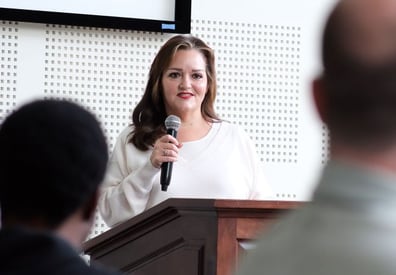
“You live at the two extremes of the college experience,” she said. “You are there in the hardest moments—crisis counseling, grief, loss, students at their most vulnerable. And you are there in the best moments—petting zoos, drag shows, dance parties, pep rallies, and everything that brings energy and joy to campus life. No other division spans that full spectrum. And no other division is asked to hold both heaviness and celebration at the same time.”
And that’s why culture matters.
“I’ve been reflecting on something (former Alabama head football) Coach Nick Saban is known for—not just as a championship coach, but as a change agent and leadership voice far beyond football,” Hodge said. “He builds teams and cultures that win, and his message is blunt: high achievers don’t like mediocre people, and mediocre people don’t like high achievers.
“That tension matters. Because the truth is, you can’t build a winning culture when those two mindsets sit side by side. High standards and mediocrity don’t mix. If everyone doesn’t buy in to
the same vision, the same principles, and the same high standard—you will never be successful. That’s not just football. That’s true for business. It’s true in higher ed. And it is true right here at Fitchburg State.”
Hodge said that it’s important to buy into the total team concept.
“Everyone has to be committed to the same vision, the same standard, the same mission,” she said. “If you want a seat at this table, you have to bring your best and commit to the work. Because misalignment—whether it’s one person, one office, or one corner of the university—pulls the whole culture down. That’s why I need the right people, on the right teams, in the right seats at the table. Aligned. Focused. Determined. That is how we change culture. That is how we serve our students. That is how we lead Fitchburg State into its future.”
Each group prepared a brief presentation about their proposal in front of a panel of judges like the show, “Shark Tank.”
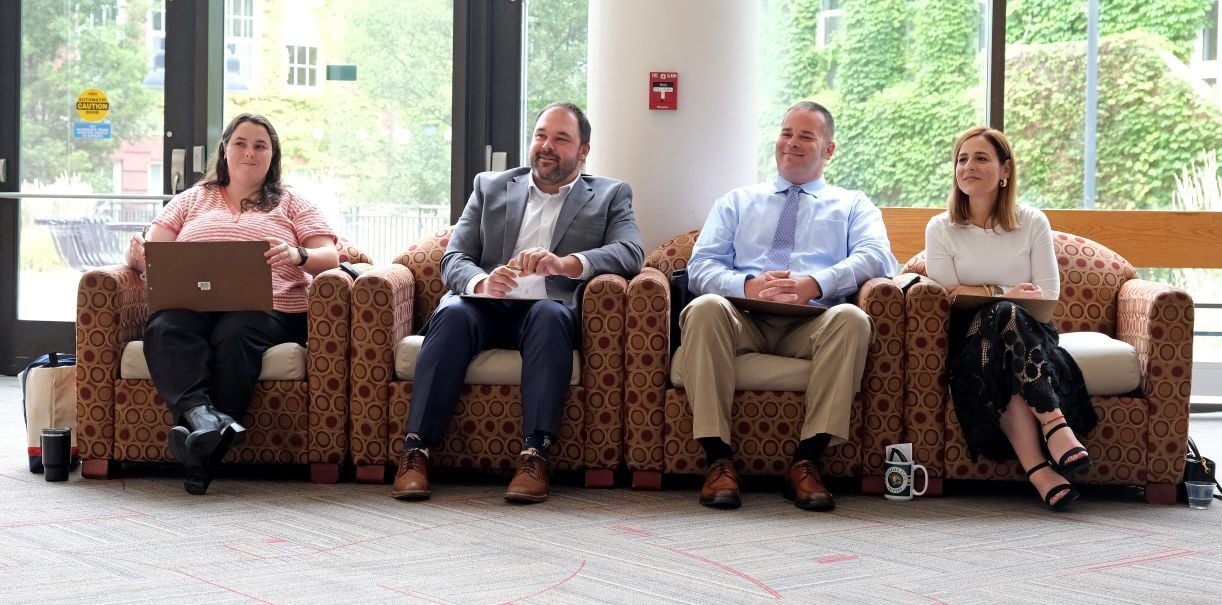
The judges were: Hailey O'Brien ‘19 (Assistant Director of Residential Experience at the College of the Holy Cross), Adam J. Keyes ’04 (Director of Educational Affairs at UMass Chan Medical School), Nathan Glenny (Executive Director of Fitchburg Access Television), and Luisa Fernandez (Family and Community Engagement Coordinator for Fitchburg Public Schools).
"This is going to be a funded initiative,” St. John said. “The winning project will be one that I will meet with the winning group – we’ll invite everyone in the division to have a part, and it will be our signature new initiative for the year.”
The project will be jointly funded by both the Dean of Students and the President.
Congratulations are in order to the group that created, “Green and Gold. Community Greenhouse and Garden.”

The project combats food insecurity, creates more student jobs, builds community engagement, fosters a peaceful environment, relieves community stress, creates opportunities for curricular infusion, contributes to nutrition and wellness, teaches food sustainability and preserves native ecosystems.
The core values of the project include accessibility, affordability, community, enrichment and excellence.
 “I love that everybody can be involved in the project, not just the students or alumni, it’s open for the community,” Fernandez said. “I loved how the presentation connected with me and that’s why I voted for them. It’s a great project. I also think it’s sustainable, which is something I really like. There are other organizations like Growing Places and the Garden Club here in Fitchburg, that I can definitely see collaborating with them.”