---
title: Career Pathways for Forensic Nurses
description: Our Forensic Nursing program is designed to prepare compassionate, skilled professionals who are ready to lead in this evolving field.
image: https://blog.fitchburgstate.edu/hubfs/Image_016-Nov-04-2025-07-07-47-7661-PM.jpg
---
[](http://www.fitchburgstate.edu/)

## [Career Pathways for Forensic Nurses](https://blog.fitchburgstate.edu/gce/career-pathways-for-forensic-nurses)
Posted by [Fitchburg State University](https://blog.fitchburgstate.edu/gce/author/submitted) on November 10, 2025 at 3:07 PM
- [Tweet](https://twitter.com/share)
*Thank you to SGOCE adjunct faculty member Liz Louden for sharing her story and writing this blog.*
When we hear “Forensic Nursing” we think of sexual assault nurse examiners, however, the forensic nursing field is far more diverse than one initially imagines.
Forensic nursing is a specialized field that combines healthcare and the legal system. Forensic nurses provide compassionate, trauma-informed care to patients (victims and/or offenders) while collecting, documenting, and interpreting evidence for use in investigations and court proceedings. These nurses can end up working in a variety of fields, all dependent on their own personal and professional journey.
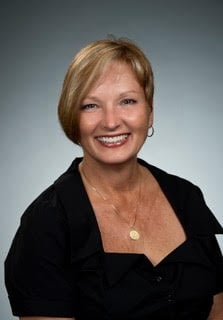
My journey into forensic nursing began and continued in the 1990s while I was working in the Emergency Department at the Rockyview Hospital in Calgary, Alberta. At that time, nurses were often viewed as responsible for setup and cleanup and not much else; that could not have been further from the truth. As I was working primarily nightshifts in triage, I witnessed a disturbing number of people who had experienced sexual assault present at the ER and in turn the forensic nursing team working like a well-oiled, trauma-informed machine, providing compassionate care and support. This teamwork and the profound impact on patient wellbeing is what inspired me to follow the path of forensic nursing.
During my preceptorship, at the Miami Dade Medical Examiner’s Office, I momentarily shifted my focus to supporting the Miami Dade police at crime scenes. Although this was an exhilarating experience, which annoyed my B&B hosts with police officers picking me up at all hours to attend crime scenes, I returned to my first passion, earning my SANE-A certification from the International Association of Forensic Nurses in 2003.
In 2017, I became the second Canadian president of IAFN, following Sheila Dawn-Early, who served as the first in 2014. Three decades later, and a lifetime of experience, I now teach Trauma and Violence Informed Care at both Nipissing University and Fitchburg State University and currently serve as the President of the Canadian Forensic Nurses Association.
Although I was drawn into the path of supporting survivors of sexualized violence, there are many other ways forensic nursing can be applied, including:
- Forensic Psychiatric or Mental Health Nurse: Caring for individuals who are in the legal system and have mental health concerns.
- Legal Nurse Consultant or Expert Witness: Analyzing medical records and offering expert opinions to assist in understanding medical/legal issues.
- Forensic Death Investigator or Coroner’s Nurse: Supporting death investigations by assessing medical findings, documenting evidence, and collaborating with coroners and forensic pathologists.
- Research, Policy, and Education: Leading studies, developing training, and advocating for policies that improve trauma-informed, evidence-based responses to violence and forensic care.
- Correctional and Custodial Nurse: Delivering healthcare to incarcerated populations.
Whether you are supporting patients who have experienced sexualized violence or leading a study on how to improve trauma-informed care, forensic nursing can be an incredibly rewarding career.
If this glimpse into the world of forensic nursing has sparked your interest, consider where this path could take you. Whether you're drawn to working directly with survivors, engaging in death investigations, shaping trauma-informed policies, or providing care within correctional facilities, forensic nursing offers a unique and deeply impactful career.

At Fitchburg State University, our Forensic Nursing program is designed to prepare compassionate, skilled professionals who are ready to lead in this evolving field. With experienced faculty, practical training, and a trauma-informed approach, you'll be equipped to make a meaningful difference, wherever your journey leads.
Ready to explore what’s possible?
Learn more about the Forensic Nursing program at Fitchburg State University and take the next step toward a career that blends healthcare, advocacy, and justice.
[](https://cta-redirect.hubspot.com/cta/redirect/376696/1337409c-60c9-40ba-9812-97e874f14fc8)
Topics: [Our Faculty](https://blog.fitchburgstate.edu/gce/topic/our-faculty), [Programs and Majors](https://blog.fitchburgstate.edu/gce/topic/programs-and-majors), [Nursing Program](https://blog.fitchburgstate.edu/gce/topic/nursing-program), [SGOCE](https://blog.fitchburgstate.edu/gce/topic/sgoce)
### Recent Posts
### Posts by Topic
- [Admissions (10)](https://blog.fitchburgstate.edu/gce/topic/admissions)
- [Advanced Placement Summer Institutes (5)](https://blog.fitchburgstate.edu/gce/topic/advanced-placement-summer-institutes)
- [Alumni (1)](https://blog.fitchburgstate.edu/gce/topic/alumni)
- [Career Services (4)](https://blog.fitchburgstate.edu/gce/topic/career-services)
- [Center for Professional Studies (16)](https://blog.fitchburgstate.edu/gce/topic/center-for-professional-studies)
- [Commencement (3)](https://blog.fitchburgstate.edu/gce/topic/commencement)
- [Communications/Media (1)](https://blog.fitchburgstate.edu/gce/topic/communications-media)
- [Community (7)](https://blog.fitchburgstate.edu/gce/topic/community)
- [Criminal Justice (2)](https://blog.fitchburgstate.edu/gce/topic/criminal-justice)
- [cybersecurity (1)](https://blog.fitchburgstate.edu/gce/topic/cybersecurity)
- [Economics, History, and Political Science (5)](https://blog.fitchburgstate.edu/gce/topic/economics-history-and-political-science)
- [Education Program (4)](https://blog.fitchburgstate.edu/gce/topic/education-program)
- [Engineering Technology (2)](https://blog.fitchburgstate.edu/gce/topic/engineering-technology)
- [Events (15)](https://blog.fitchburgstate.edu/gce/topic/events)
- [Faculty (1)](https://blog.fitchburgstate.edu/gce/topic/faculty)
- [Fitchburg Art Museum (1)](https://blog.fitchburgstate.edu/gce/topic/fitchburg-art-museum)
- [Graduate Programs (10)](https://blog.fitchburgstate.edu/gce/topic/graduate-programs)
- [Health and Natural Sciences (3)](https://blog.fitchburgstate.edu/gce/topic/health-and-natural-sciences)
- [Humanities (2)](https://blog.fitchburgstate.edu/gce/topic/humanities)
- [Information Session (11)](https://blog.fitchburgstate.edu/gce/topic/information-session)
- [Information Technology (1)](https://blog.fitchburgstate.edu/gce/topic/information-technology)
- [International Admissions (1)](https://blog.fitchburgstate.edu/gce/topic/international-admissions)
- [International Education (3)](https://blog.fitchburgstate.edu/gce/topic/international-education)
- [Meet the Faculty (1)](https://blog.fitchburgstate.edu/gce/topic/meet-the-faculty)
- [Nursing Program (1)](https://blog.fitchburgstate.edu/gce/topic/nursing-program)
- [Our Faculty (14)](https://blog.fitchburgstate.edu/gce/topic/our-faculty)
- [Our Students (15)](https://blog.fitchburgstate.edu/gce/topic/our-students)
- [Preparing for College (2)](https://blog.fitchburgstate.edu/gce/topic/preparing-for-college)
- [Programs (97)](https://blog.fitchburgstate.edu/gce/topic/programs)
- [Programs and Majors (9)](https://blog.fitchburgstate.edu/gce/topic/programs-and-majors)
- [SGOCE (4)](https://blog.fitchburgstate.edu/gce/topic/sgoce)
- [Staff (1)](https://blog.fitchburgstate.edu/gce/topic/staff)
- [Student Experience (4)](https://blog.fitchburgstate.edu/gce/topic/student-experience)
- [Webinars (39)](https://blog.fitchburgstate.edu/gce/topic/webinars)
[see all](https://blog.fitchburgstate.edu/gce/career-pathways-for-forensic-nurses#)
### Subscribe to Email Updates
### Connect with Us
Copyright © 2024 Fitchburg State University. All rights reserved
160 Pearl St., Fitchburg MA 01420-2697 978.665.3182
[School of Graduate, Online and Continuing Education](https://www.fitchburgstate.edu/academics/graduate-academics/school-graduate-online-and-continuing-education)